
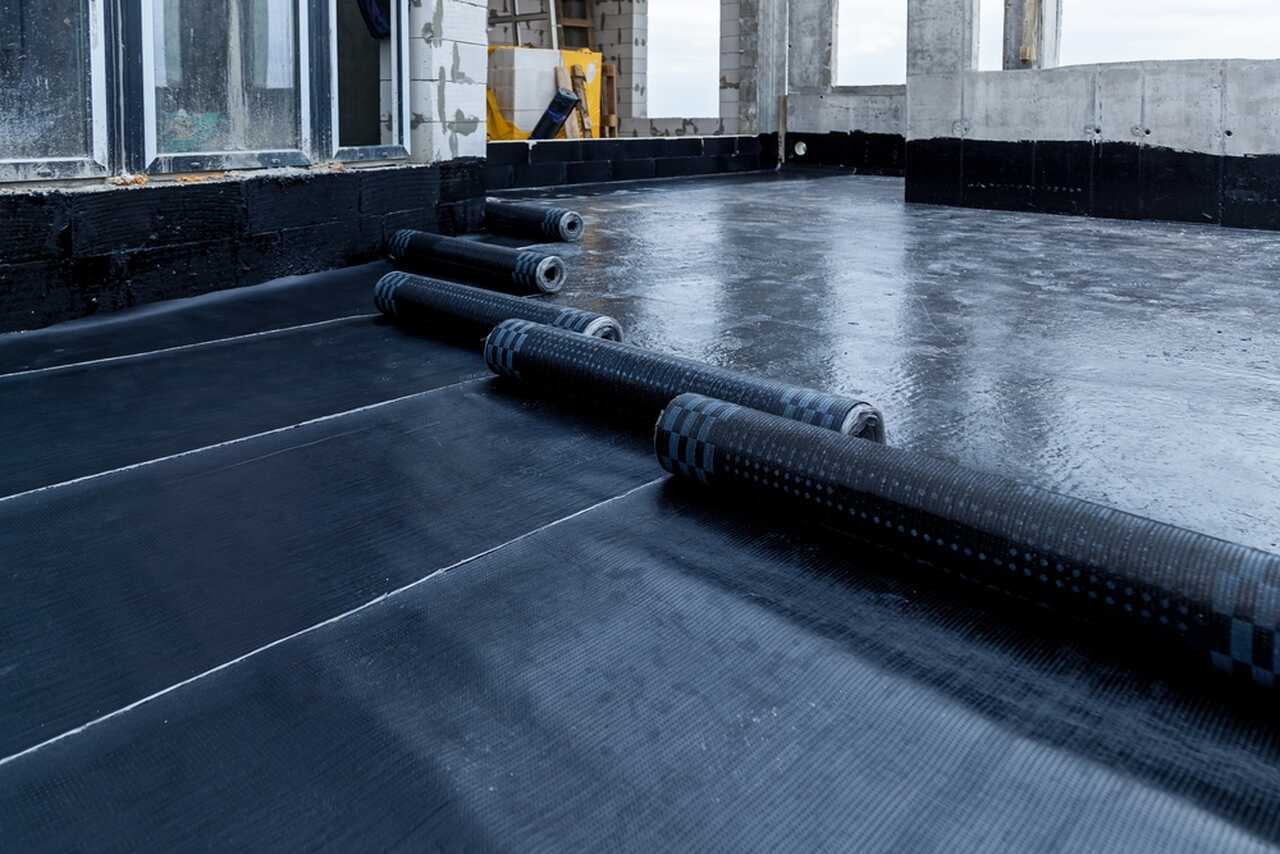
Bitumen membrane waterproofing protects roofs, basements, podiums and foundations across Dubai, Abu Dhabi, Sharjah and the rest of the UAE with a tough, proven barrier against water. Saba Al Waha supplies and installs torch-applied and self-adhesive membranes with our own supervised crews.
What is bitumen membrane waterproofing?
A bitumen membrane is a factory-made sheet of modified bitumen reinforced with polyester or glass fibre. It is laid in overlapping rolls and bonded to the prepared surface, either by torching (heat-applied) or with a self-adhesive backing. Once the laps are sealed, the membrane forms a continuous, watertight layer that stays flexible as the building moves and expands in the heat.
Where we use it
- Flat roofs and terraces – under screed, tiles or insulation as part of a full roof system
- Basements and foundations – below-ground walls and slabs exposed to groundwater and salty soil
- Podium decks and car parks – under landscaping, paving and traffic layers
- Water tanks, planters and wet areas – where a robust sheet membrane is specified
Why it suits UAE buildings
- Handles extreme heat – polymer-modified (APP and SBS) membranes stay stable in summer roof temperatures and remain flexible when it cools at night.
- Consistent thickness – factory-made sheets give the same thickness everywhere, unlike materials mixed on site.
- Resists groundwater and salts – a strong choice for basements in coastal areas with high water tables.
- Long service life – correctly installed and protected, a membrane system lasts for many years with little maintenance.
Our installation process
- Site inspection – our engineer checks the surface, slopes, drains and any existing leaks, then recommends the right membrane.
- Surface preparation – cleaning, repairs to cracks and hollows, and fillets at wall–floor joints.
- Primer – a bitumen primer is applied so the membrane bonds fully to the concrete.
- Membrane laying – rolls are torched or bonded with sealed side and end laps, with extra layers at upstands, drains and pipe penetrations.
- Flood test – roofs are flood tested before any protection layer goes on.
- Protection – screed, protection board or insulation keeps the membrane safe from damage and UV.
Every crew works under a dedicated, non-working supervisor, and we use manufacturer-approved systems from brands such as BASF, Mapei and Henkel.
Frequently asked questions
Torch-applied or self-adhesive – which is better?
Torch-applied membranes give a very strong bond and suit most roofs and basements. Self-adhesive membranes avoid open flame, so they are used where hot works are restricted or on occupied buildings. We recommend the right one after the site inspection.
Can a new membrane go over an old one?
Sometimes. If the existing layer is well bonded and dry, we can overlay it; if it is blistered or holding water, we remove it first. The inspection tells us which.
How long does the work take?
It depends on area and access, but most villa roofs take only a few days including the flood test. We give you a schedule with the quotation.
Need a leaking roof or basement fixed? Call or WhatsApp +971 54 481 1770 or request a free site inspection.